
Where BCDC Releases Go
Baltimore County Detention Center is a county jail. It holds pretrial detainees and locally sentenced people, along with people recorded as in transit or in other statuses. A release can return someone to the community after bond, a court order, time served, or local sentence completion. It can also move the person to the Maryland Department of Public Safety and Correctional Services, another county, the U.S. Marshals Service, or U.S. Immigration and Customs Enforcement. The sending facility's custody closes in each situation, but only some are community releases.
The BCDC release or base-file entry, Daily Desk Report, Locator Card Index, and Monthly Release List are the principal local sources described in Baltimore County Corrections Records Retention Schedule C-800. Ask for the release type and destination or receiving agency. The destination controls the next search: Maryland DPSCS for state custody, BOP or federal court records for a federal path, ICE for immigration custody, or the named county for an intercounty transfer. Maryland VINE and the court docket can corroborate the sequence but do not replace the facility's historical entry.
Confirm a BCDC Release
Baltimore County publishes no official current inmate roster, 24-hour or 72-hour release list, historical released-person search, or booking-photo gallery. Repeating a web roster search therefore cannot establish a past release. Use a known-person workflow:
- Search Maryland VINE for the custody record or recent event, checking the reporting facility and identifiers.
- Review the Maryland Judiciary case for the order, disposition, sentence, bond, probation, and later actions.
- Call BCDC at 410-512-3200 to verify the proper records route and whether another agency received the person.
- Send a focused Maryland Public Information Act request naming the release record series and approximate date.
- If the record shows transfer, check the receiving agency rather than treating the BCDC exit as release to the community.
The Baltimore County released-inmate search guide compares all custody types in one place. A VINE event is valuable for notification and routing, while the court record explains legal authority. For an exact historical exit, the County custodian's release entry remains the direct source.
Request BCDC Release Records
Direct a narrow request to Baltimore County Department of Corrections / Baltimore County Detention Center, 720 Bosley Avenue, Towson, MD 21204. The main facility and operator telephone is 410-512-3200, the department leadership line is 410-512-3400, and the researched email is corrections@baltimorecountymd.gov. No official universal County Corrections copy-price sheet or public release-processing hours were located. Ask for electronic delivery and a fee estimate instead of assuming the separate state DPSCS fee terms apply.
720 Bosley Avenue
Towson, MD 21204
410-512-3200
corrections@baltimorecountymd.gov
Give the person's full name, date of birth and BCDC number if known, and an approximate booking or release date. Ask for the releasable release entry or automated summary/base-file release page. For a known date, name the Daily Desk Report; for an uncertain date, name the Locator Card Index; for a known month, add the Monthly Release List. Request actual release date and time, release or disposition type, and destination or receiving agency. If a photo is needed, ask for the booking or intake photograph associated with that stay “if releasable,” and request segregation of exempt information.
BCDC Release Record Series
Schedule C-800 makes the local record architecture unusually specific. The inmate base folder may contain commitments, court material, hearing notices, releases, writs, dispositions, detainers, property or money documents, photo identification, and a chronological history through release. The automated record is printed at release and placed in the base file. The schedule describes a five-year period after last release, subject to longer detainer or litigation need. A later return to custody changes which release is the operative last release.
The Locator Card Index records identity data, aliases, a BCDC identifier, and release dates for every person held. Historical cards carry microfilm and permanent-retention language, making the index useful when the precise stay is unknown. The Daily Desk Report, formerly called the Jail Docket, records people received and released each day and is the strongest date-centered request. The Monthly Release List package includes diminution and other month-level reports. These records should be requested by their functions even if Corrections says a software migration changed their current titles.
About Baltimore County Detention Center
BCDC is operated by Baltimore County Department of Corrections, not by the Baltimore County Sheriff and not by the State of Maryland. That distinction matters because Baltimore City detention facilities are operated by DPSCS, and search results often collapse “Baltimore jail” into the wrong jurisdiction. Confirm the Towson address and County operator before requesting a record. A BCDC stay does not automatically appear in the state Incarcerated Individual Locator.
FY2025 state capital testimony reported quarterly BCDC average daily populations of 1,032, 1,042, 1,005, and 1,026, with a peak of 1,160. These are population measures, not release totals. They should not be multiplied or represented as the number of people released. The facility's public program material describes Classification and Pretrial Services, Community Corrections, Alternative Sentencing, education and development, faith-based services, and reentry or rehabilitative programming. Participation in a program is not evidence that a particular person left custody.
The official County volunteer profile provides a useful view of facility programming and is shown below.
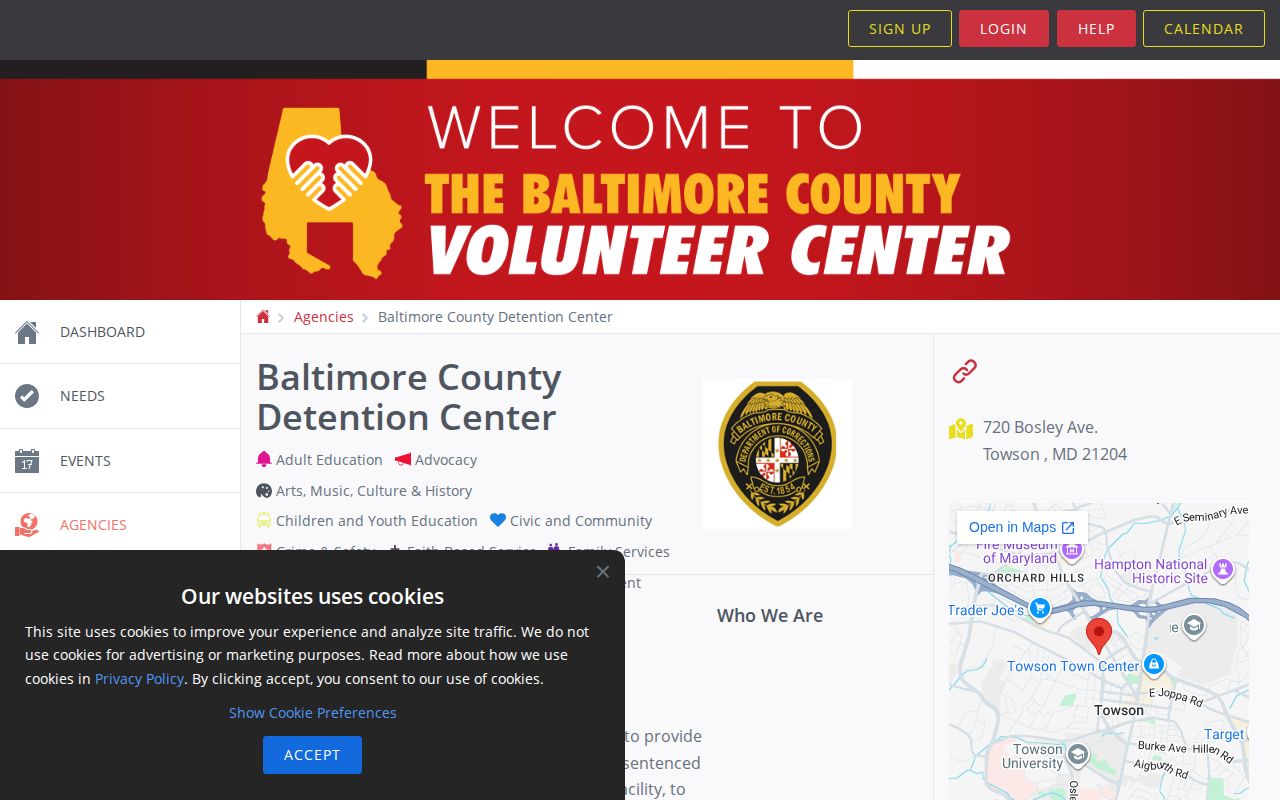
Use the profile for institutional context, then use Corrections records for an individual release.
BCDC Release to ICE
An ICE detainer can convert an expected BCDC release into transfer to federal immigration custody. ICE describes a detainer as a request that a local agency give notice and maintain custody for up to 48 additional hours beyond the otherwise authorized release so federal officers can assume custody. A BCDC entry reading “released to ICE” documents the end of County custody, not necessarily return to family or community.
Request the destination field and detainer disposition from BCDC to the extent releasable. Then use the ICE Online Detainee Locator with an A-number and country of birth, or the exact biographical search fields. ICE's public descriptions differ on the scope of recent-release history, so treat any reported 60-day window cautiously and verify with the live service. Immigration check-ins after detention release are separate from Maryland court, parole, and probation duties.
Property Returned at BCDC Release
Schedule C-800 says confiscated property is inventoried. At release, the person signs a receipt and receives property plus a copy of the receipt; a signed copy remains in the base file under the schedule's five-year provision. A focused request for that receipt can help identify what BCDC recorded as returned. Include the custody dates so staff do not confuse multiple admissions.
Courthouse property handled by the Baltimore County Sheriff follows a different policy. Direct an intake-property or release-property question from BCDC to the Department of Corrections, even though the County courthouse and detention center are both in Towson. The property receipt can support a dispute, but it does not itself establish the legal reason for release or any later supervision status.
Baltimore County Jail History
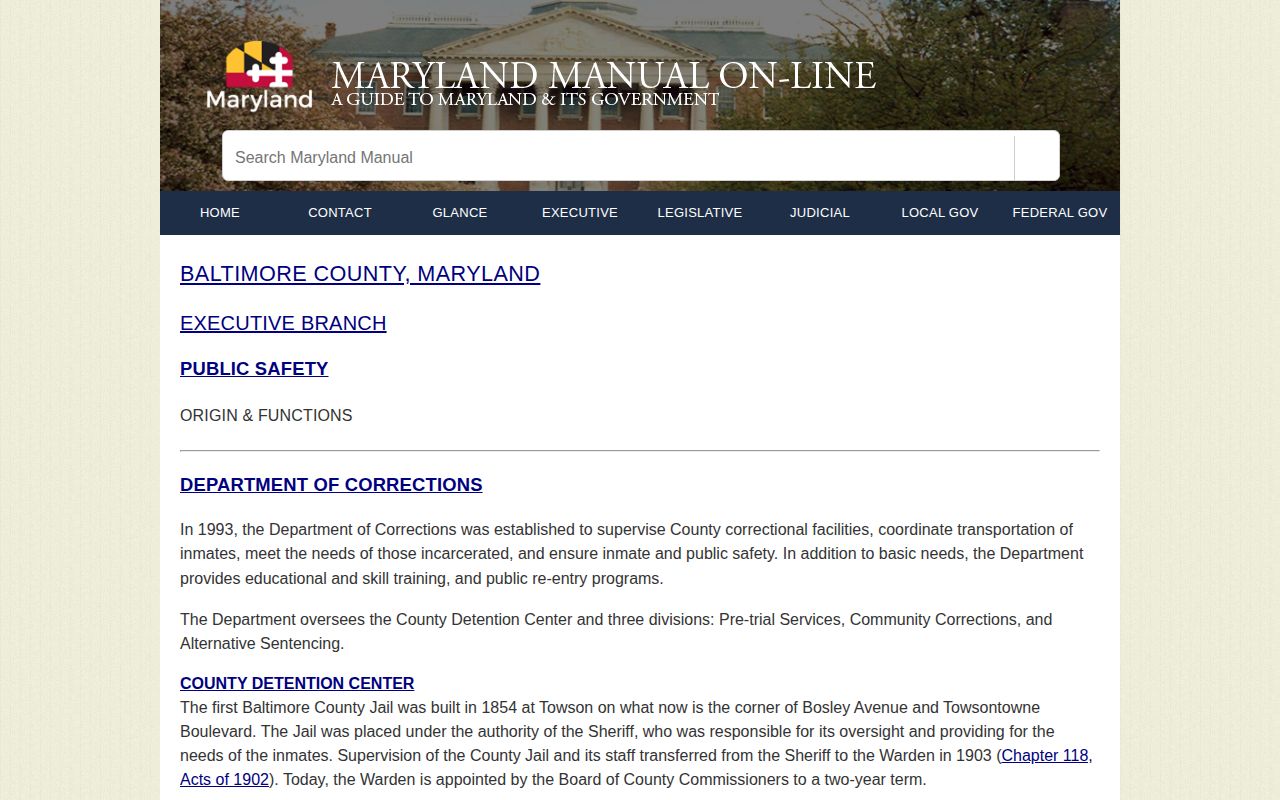
The first Baltimore County jail was built in 1854 near Bosley Avenue and Towsontowne Boulevard. Authority shifted from the Sheriff to the Warden in 1903, and Baltimore County established the Department of Corrections in 1993. That development explains the present operator and why calling BCDC a sheriff's jail is inaccurate. The Maryland State Archives county public-safety history documents this institutional line.
The agency-history source is pictured below and helps distinguish operator responsibilities.
Adult BCDC procedures also must not be applied to the Charles H. Hickey, Jr. School in Parkville. That secure youth facility is operated by the Maryland Department of Juvenile Services, and juvenile custody and release records follow separate, generally nonpublic rules. Its exclusion from the adult facility map is deliberate, not an oversight.
The operator history also guides requests. The Baltimore County Sheriff handles courthouse security and other statutory functions, but the Department of Corrections is the BCDC custodian identified by County sources. Sending a detention release request to a similarly named Baltimore City or state office adds delay and may produce a correct “no record” response from the wrong agency. State the Towson facility, County operator, dates, and BCDC number whenever it is available. If Corrections identifies a receiving institution, begin a second request or locator search with that agency rather than asking BCDC to certify what happened after its custody ended.